
momaspet
Online Pet Consultancy & Veterinary Guidance
Why Is My Cat Losing Hair? Bald Patches, Over-Grooming and Skin Changes Explained
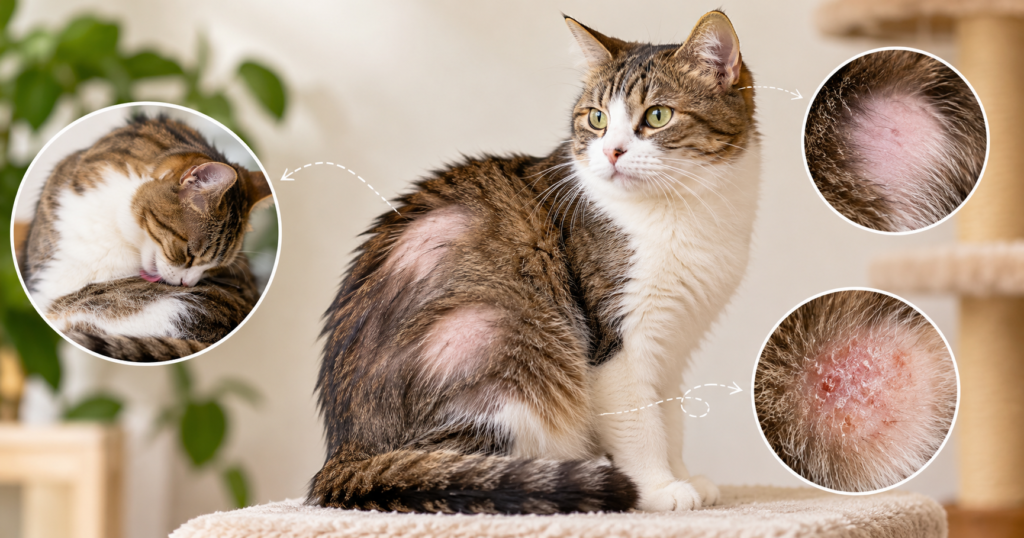
Hair loss in cats is a sign, not a diagnosis. Common causes include fleas and other parasites, allergies, bacterial or fungal skin disease, pain or itching that triggers over-grooming, and less commonly nutritional, hormonal or other medical problems. Bald patches with redness, sores, scaling or intense grooming should be evaluated by a veterinarian.
Pet owners often search for a fast answer when something changes, but the safest answer is rarely a one-size-fits-all product recommendation. This guide explains why is my cat losing hair in plain language, shows what information is useful to track, and helps U.S. pet owners know when professional veterinary care matters.
Hair loss versus normal shedding
Normal shedding removes old hair without creating obvious bald areas. True alopecia leaves visibly thin or hairless skin and usually deserves investigation, especially if it is focal, symmetrical or accompanied by skin changes.
Why over-grooming causes bald patches
A cat can break and remove hair through repeated licking. Merck notes that excessive self-grooming may create symmetrical hair loss in places the cat can reach, such as the belly, flanks and inner thighs.
Common causes veterinarians consider
Fleas and flea allergy
A cat does not need to be covered in fleas to react strongly to bites. Flea allergy is a common cause of itchy, self-induced hair loss.
Allergies
Environmental and food-related hypersensitivity can cause itching, skin lesions and over-grooming.
Infection
Bacterial and fungal infections can damage hair or inflame skin.
Pain
Cats may repeatedly lick an area that hurts, including over joints or the abdomen.
Stress and behavior
Behavioral over-grooming is possible, but medical causes of itch or pain should be considered first.
What your veterinarian may do
Diagnosis can involve coat and skin examination, flea combing, skin scrapings, cytology, fungal testing, allergy assessment, blood work or biopsy depending on the pattern and history.
Photos and home observations that help
Photograph the same area every few days, note grooming frequency, check whether the skin is red or normal-looking, and record changes in food, litter, household products or parasite prevention.
Why random topical treatment can delay the answer
A cream may temporarily change redness without treating parasites, allergy or fungal disease. In cats, product safety also matters because grooming increases ingestion risk.
How this connects to MomasPets
MomasPets can help you review product details, pack information and pet-care options after you have identified what your pet actually needs. For prescription or condition-specific medication, follow your veterinarian’s recommendation and any applicable U.S. prescription requirements.
Looking for clearly labeled pet-care products and practical product information? Browse MomasPets and verify the exact product, strength, species and pack details before checkout. For veterinary medicines, use your veterinarian’s guidance as the deciding factor. |
Frequently Asked Questions
Can stress make a cat lose hair?
Yes, behavioral over-grooming can occur, but veterinarians generally consider physical causes of itch, pain and skin disease before concluding stress is the main driver.
Why is my cat bald on the belly?
Belly hair loss is often caused by self-grooming. Fleas, allergy, pain and other conditions can trigger it.
Will cat hair grow back?
Often, yes, once the underlying cause is controlled and the skin and follicles remain capable of normal growth. Regrowth time varies.
Is ringworm always circular?
No. Fungal skin disease can have varied appearances, so shape alone cannot confirm or rule it out.

About Us.
As pet parents ourselves, we’re devoted to the well-being of all pets in all situations. Our entire existence is dedicated to a “pet-first” mentality that seeks the most optimal outcomes in every situation.
Newsletter.


momaspet is proudly powered by WordPress