
momaspet
Online Pet Consultancy & Veterinary Guidance
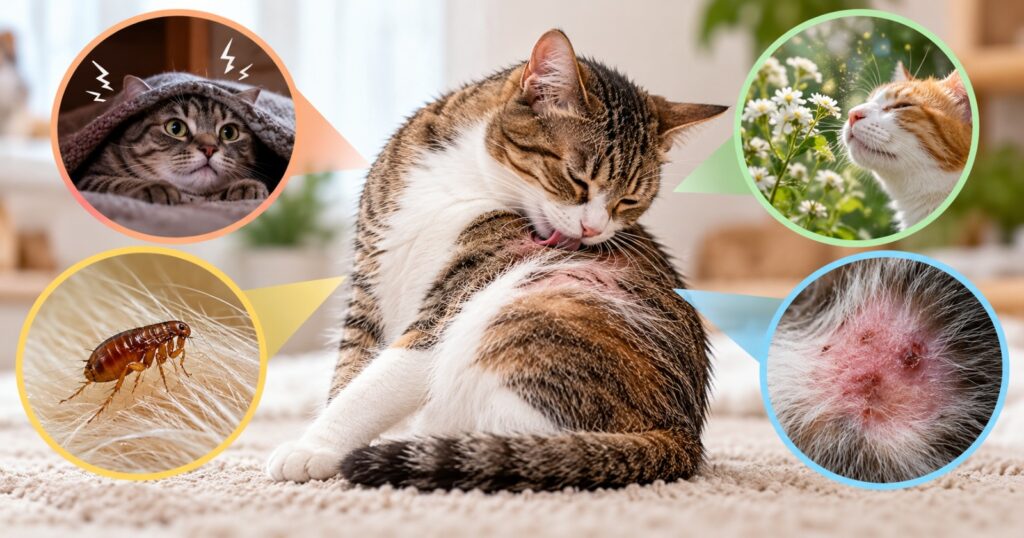
Cat Over-Grooming: Stress, Fleas, Allergies or Skin Problems?
Cats over-groom when something makes the skin or body uncomfortable—or, less commonly, as a behavioral response to stress. Fleas, allergies, infection and pain should be considered before assuming the problem is purely behavioral. Broken hair, bald patches, redness or scabs are useful clues for your veterinarian.
Pet owners often search for a fast answer when something changes, but the safest answer is rarely a one-size-fits-all product recommendation. This guide explains cat over grooming in plain language, shows what information is useful to track, and helps U.S. pet owners know when professional veterinary care matters.
What counts as over-grooming
The key is a change from your cat’s normal routine: repeated licking in one area, grooming that interrupts play or sleep, thinning fur, broken hairs or bald patches. Because cats often groom privately, the coat change may be the first obvious sign.
Fleas can be present even when you do not see them
A flea-sensitive cat may groom away evidence of fleas. Your veterinarian may recommend flea control as part of the diagnostic plan even when live fleas are hard to find.
Allergies and skin inflammation
Food or environmental hypersensitivity can cause itch, small crusts, redness and self-trauma. The pattern alone does not reliably identify the allergen.
Pain can look like grooming
A cat may lick over an uncomfortable joint, abdomen or other painful area. That is one reason a full physical exam matters rather than focusing only on the skin.
Where stress fits
Changes in household routine, conflict between cats, lack of resources or other stressors can contribute to repetitive grooming. Behavioral management works best after medical problems have been addressed or reasonably excluded.
What you can do now
Use consistent parasite prevention recommended for your cat, avoid new topical products without guidance, provide predictable resources and enrichment, and record where and when grooming occurs. Photos of hair loss progression are useful.
How this connects to MomasPets
MomasPets can help you review product details, pack information and pet-care options after you have identified what your pet actually needs. For prescription or condition-specific medication, follow your veterinarian’s recommendation and any applicable U.S. prescription requirements.
Looking for clearly labeled pet-care products and practical product information? Browse MomasPets and verify the exact product, strength, species and pack details before checkout. For veterinary medicines, use your veterinarian’s guidance as the deciding factor. |
Frequently Asked Questions
Why does my cat over-groom only at night?
Timing can be influenced by routine, boredom, stress or discomfort. The pattern is worth noting, but it does not identify the cause by itself.
Can fleas cause over-grooming without visible bites?
Yes. Cats may remove fleas and flea dirt while grooming, and flea-allergic cats can react strongly to limited exposure.
How do I know if over-grooming is stress?
There is no single home test. A veterinarian can help rule out common medical causes; then environmental and behavioral factors can be addressed.
Should I put a cone on my cat?
An e-collar may sometimes prevent self-trauma, but it does not treat the cause and can add stress. Ask your veterinarian when it is appropriate.

About Us.
As pet parents ourselves, we’re devoted to the well-being of all pets in all situations. Our entire existence is dedicated to a “pet-first” mentality that seeks the most optimal outcomes in every situation.
Newsletter.


momaspet is proudly powered by WordPress