
momaspet
Online Pet Consultancy & Veterinary Guidance
Cat Skin Problems: 7 Changes Worth Discussing With Your Vet
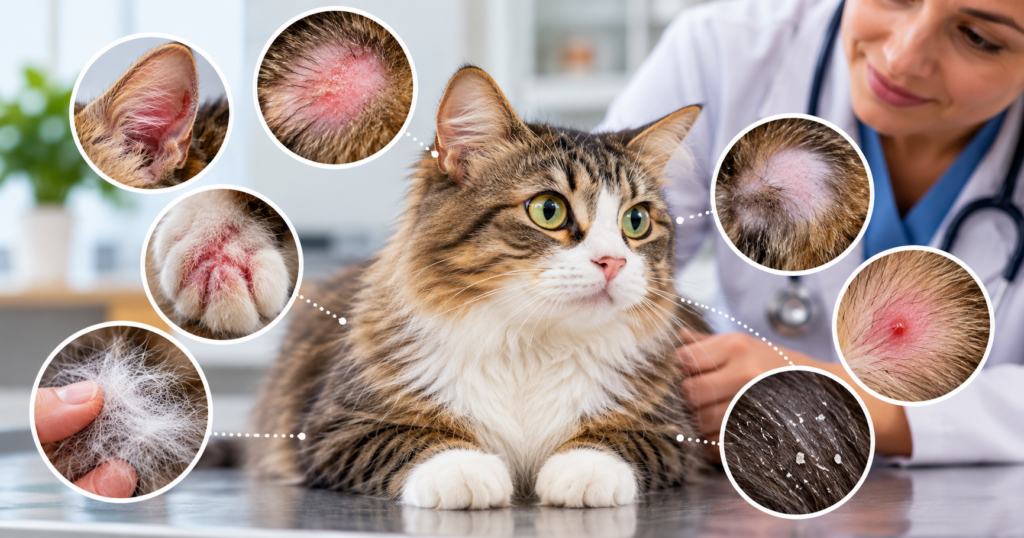
Common signs of cat skin problems include excessive grooming, hair loss, scabs, redness, scaling, greasy or unusually dry skin, and sores or discharge. Causes range from fleas and allergies to infection, pain and other disease, so treatment should be based on a veterinary diagnosis rather than appearance alone.
Pet owners often search for a fast answer when something changes, but the safest answer is rarely a one-size-fits-all product recommendation. This guide explains cat skin problems in plain language, shows what information is useful to track, and helps U.S. pet owners know when professional veterinary care matters.
Seven skin changes to notice
1. Over-grooming
Cats can groom privately, so you may notice shortened or broken hair before you actually see excessive licking.
2. Bald patches
Hair loss may result from itching, infection, parasites, allergy, pain or less commonly other systemic disease.
3. Small scabs or crusts
Tiny crusted bumps can be easy to miss under a thick coat but may signal an inflammatory skin problem.
4. Redness
Red skin can accompany allergy, self-trauma, infection or irritation.
5. Flakes or scale
Dandruff-like scale may occur with dry skin, parasites, infection or impaired grooming.
6. Greasy coat or unusual odor
Changes in oiliness or odor can point toward skin or ear disease and deserve an exam if persistent.
7. Open sores, discharge or swelling
These signs can indicate significant inflammation or secondary infection and should be assessed promptly.
Why cats hide itchiness
Merck notes that cats can be subtle about itching. Some cats over-groom instead of visibly scratching, creating symmetrical areas of hair loss on the belly, thighs or flanks.
Common categories of causes
Veterinarians consider parasites such as fleas, allergic disease, bacterial or fungal infection, self-trauma, pain, contact irritation and less common systemic or neoplastic causes.
What not to do
Avoid treating every skin problem with the same cream, shampoo or leftover medication. Cats are sensitive to several ingredients used safely in other species, and licking topical products can increase exposure.
What to bring to the appointment
Take photos, note when the problem started, whether your cat is licking or scratching, parasite-prevention history, diet changes, new household products and whether other pets or people have skin lesions.
How MomasPets content should support—not replace—care
Product pages can help you understand formulation and label information, but persistent skin disease needs a diagnosis. Use store information to prepare questions and confirm exactly what your veterinarian has recommended.
How this connects to MomasPets
MomasPets can help you review product details, pack information and pet-care options after you have identified what your pet actually needs. For prescription or condition-specific medication, follow your veterinarian’s recommendation and any applicable U.S. prescription requirements.
Looking for clearly labeled pet-care products and practical product information? Browse MomasPets and verify the exact product, strength, species and pack details before checkout. For veterinary medicines, use your veterinarian’s guidance as the deciding factor. |
Frequently Asked Questions
Why is my cat licking the fur off its belly?
Over-grooming can be triggered by itch, allergy, parasites, pain or behavioral stress. Because several causes look similar, a veterinary exam is important.
Are scabs on a cat always fleas?
No. Fleas are common, but allergies, infection and other skin diseases can also cause crusts.
Can I use dog skin products on my cat?
Not unless a veterinarian confirms the product is safe for cats. Some dog products contain ingredients that can be toxic to cats.
When is a cat skin problem urgent?
Seek prompt care for rapidly spreading swelling, severe pain, open or infected wounds, facial swelling, difficulty breathing, major lethargy or suspected chemical exposure.

About Us.
As pet parents ourselves, we’re devoted to the well-being of all pets in all situations. Our entire existence is dedicated to a “pet-first” mentality that seeks the most optimal outcomes in every situation.
Newsletter.


momaspet is proudly powered by WordPress