
momaspet
Online Pet Consultancy & Veterinary Guidance
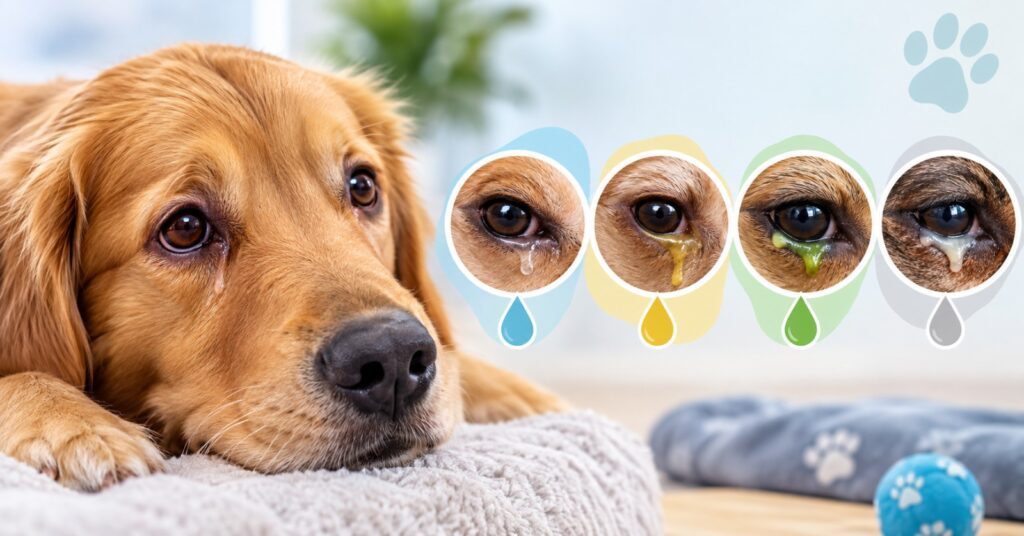
Dog Eye Discharge: What Clear, Yellow, Green or Thick Discharge Can Mean
Dog eye discharge can range from normal tearing to a sign of irritation, infection, injury, dry eye or another eye condition. Clear discharge is often less urgent than thick yellow or green discharge, but color alone cannot diagnose the cause. Squinting, eye pain, cloudiness, swelling, trauma, or sudden vision changes warrant prompt veterinary attention.
Pet owners often search for a fast answer when something changes, but the safest answer is rarely a one-size-fits-all product recommendation. This guide explains dog eye discharge in plain language, shows what information is useful to track, and helps U.S. pet owners know when professional veterinary care matters.
What different colors of dog eye discharge can mean
Clear or watery discharge
Clear tearing may occur with mild irritation, wind, dust, allergies, tear-drainage problems or early eye disease. Persistent watering—especially from one eye—deserves an exam because scratches, foreign material and eyelid problems can look deceptively mild.
White or gray mucus
Whitish or stringy material may appear when the tear film is abnormal or the eye surface is irritated. If the eye also looks red, dull, painful or sticky, a veterinarian can test tear production and inspect the cornea.
Yellow or green discharge
Yellow or green discharge often raises concern for inflammation or infection, but it does not tell you which organism or condition is responsible. Eye infections can be secondary to another problem, so treating only the discharge may miss the underlying cause.
Brown or reddish tear staining
Rust-colored staining beneath the eyes is usually caused by pigments in tears rather than blood. The important question is why the tearing is excessive or why tears are not draining normally.
When eye discharge is an emergency
Seek urgent veterinary care for eye trauma, a suddenly closed or very painful eye, marked swelling, a blue/cloudy cornea, bleeding, a visible foreign object, chemical exposure, or sudden vision problems. Eye conditions can progress quickly, and delays can threaten comfort or vision.
What your veterinarian may check
A veterinary eye exam may include inspection of the eyelids and conjunctiva, corneal staining to look for ulcers, tear testing, pressure measurement when indicated, and evaluation for foreign material or infection. The treatment depends on the diagnosis—not simply the color of the discharge.
Where ophthalmic antibiotics fit
Antibiotic eye medicines such as tobramycin may be prescribed for certain bacterial eye conditions. They are not appropriate for every red or watery eye, and an eye ulcer, dry eye, allergy or injury may require a different plan. Use ophthalmic medication only as directed by a veterinarian.
How to prepare for the vet visit
Note when the discharge started, whether one or both eyes are affected, the color and consistency, squinting or rubbing, recent grooming or outdoor exposure, and any products already used. A photo taken before cleaning the eye can also help show how the discharge looked at home.
How this connects to MomasPets
MomasPets can help you review product details, pack information and pet-care options after you have identified what your pet actually needs. For prescription or condition-specific medication, follow your veterinarian’s recommendation and any applicable U.S. prescription requirements.
Tobramycin Ophthalmic Solution 5 mL
MomasPets Shop
Looking for clearly labeled pet-care products and practical product information? Browse MomasPets and verify the exact product, strength, species and pack details before checkout. For veterinary medicines, use your veterinarian’s guidance as the deciding factor.
Frequently Asked Questions
Is green eye discharge in dogs always an infection?
No. Green discharge can occur with infection and significant inflammation, but appearance alone cannot identify the cause. A veterinary eye exam is the safest way to determine treatment.
Can I use leftover eye drops on my dog?
Do not use leftover or another pet’s eye medication unless your veterinarian tells you to. Some eye conditions can worsen with the wrong medicine, and old bottles may be contaminated or expired.
Should I clean my dog’s eye before the appointment?
You can gently wipe discharge from the fur with clean damp gauze if your dog tolerates it, but avoid putting solutions or medications into the eye unless your veterinarian has advised them.
When should I call a veterinarian?
Call promptly if discharge is persistent, thick, yellow or green, or accompanied by redness, swelling, squinting, rubbing, cloudiness, trauma or behavior suggesting pain.

About Us.
As pet parents ourselves, we’re devoted to the well-being of all pets in all situations. Our entire existence is dedicated to a “pet-first” mentality that seeks the most optimal outcomes in every situation.
Newsletter.


momaspet is proudly powered by WordPress