
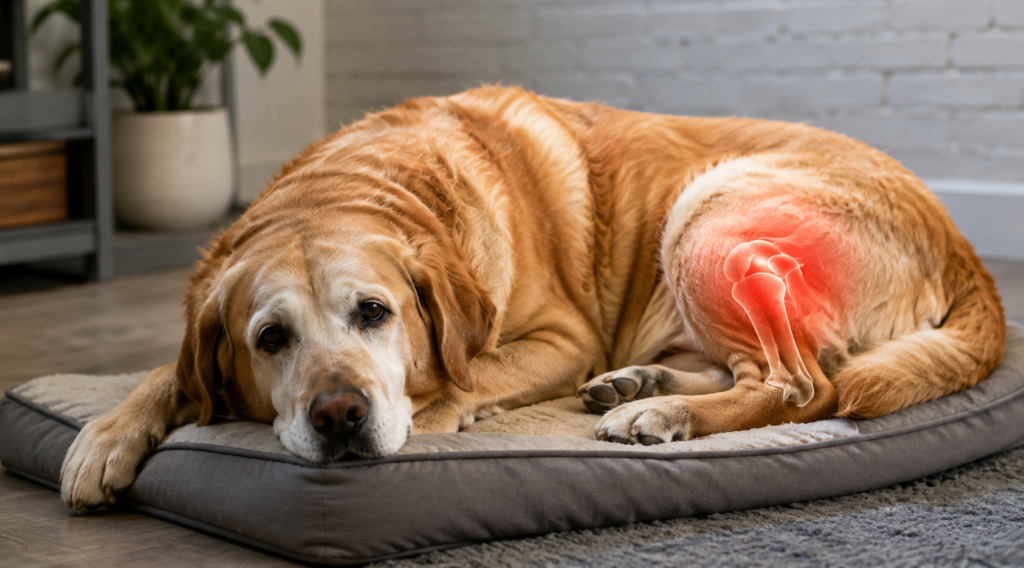
Joint pain in older dogs commonly shows up as stiffness after rest, reluctance to jump or climb stairs, and slower movement overall, often linked to osteoarthritis. Management typically combines a vet-prescribed anti-inflammatory such as carprofen for flare-ups with a joint-support supplement for longer-term maintenance, plus weight management and moderate exercise.
Medically reviewed by Dr. Dinesh Moliya, B.V.Sc & A.H, M.V.Sc & A.H — 16 years of clinical veterinary experience.
Joint pain is one of the most common, and most under-recognized, issues in senior dogs. Because it develops gradually, owners often mistake it for their dog simply “slowing down with age” rather than a manageable medical condition.
Osteoarthritis is the most common cause of chronic joint pain in older dogs, caused by the gradual breakdown of cartilage within the joint. Larger breeds and dogs carrying extra weight are at higher risk, though any dog can develop it with age.
Vets often recommend a combined approach: a prescription anti-inflammatory such as carprofen to manage pain and inflammation during flare-ups, alongside a joint-support supplement containing ingredients like glucosamine and chondroitin for longer-term joint maintenance.
Weight management plays a bigger role than many owners expect — even a small amount of extra weight adds meaningful stress to already compromised joints, so keeping a senior dog lean is one of the most effective non-medication interventions available.
Complete rest can actually worsen stiffness. Vets generally recommend shorter, more frequent walks on soft surfaces over long, infrequent ones, along with low-impact activity such as swimming where available.
Approach | Purpose | Timeframe |
|---|---|---|
Carprofen (vet-prescribed) | Reduce pain & inflammation during flare-ups | Short to medium term, as directed |
Joint support supplement | Support cartilage health long-term | Ongoing, daily |
Weight management | Reduce joint load | Ongoing |
Moderate low-impact exercise | Maintain mobility & muscle support | Ongoing |
🛍️ SHOP THIS PRODUCT Bonilage Joint Tablets — joint-support supplement formulated to support long-term mobility in senior dogs. View & order: shop.momaspets.com/product/bonilage-joint-tablets/ |
How do I know if my senior dog has joint pain?
Common signs include stiffness after rest, reluctance to jump or climb stairs, and reduced activity levels — these are worth a vet check rather than being written off as normal aging.
Is osteoarthritis in dogs curable?
It’s not curable, but it’s very manageable with a combination of medication, supplements, weight control, and appropriate exercise, and most dogs see meaningful improvement in comfort with the right plan.
Can supplements alone manage joint pain?
Supplements support long-term joint health but usually aren’t enough on their own during active pain flare-ups, when a vet-prescribed anti-inflammatory is typically needed alongside them.
Does weight really affect joint pain that much?
Yes — even modest excess weight significantly increases the load on already compromised joints, making weight management one of the most effective interventions available.
Should I reduce my senior dog’s exercise if they have joint pain?
Not entirely — shorter, more frequent low-impact walks generally help more than complete rest, which can actually increase stiffness.
Are some breeds more prone to joint pain?
Larger and giant breeds are statistically more prone to joint issues as they age, though any dog can develop osteoarthritis over time.
Can carprofen be used long-term?
It can be used for extended periods under veterinary supervision, with periodic monitoring to ensure it continues to be appropriate for your dog’s individual health status.
👨⚕️ NOT SURE WHAT’S GOING ON? Book a free online consultation with Dr. Dinesh Moliya (B.V.Sc & A.H, M.V.Sc & A.H, 16 years clinical experience) at momaspets.com — get a vet’s read on your pet’s symptoms before you decide on treatment. |
As pet parents ourselves, we’re devoted to the well-being of all pets in all situations. Our entire existence is dedicated to a “pet-first” mentality that seeks the most optimal outcomes in every situation.



