
momaspet
Online Pet Consultancy & Veterinary Guidance
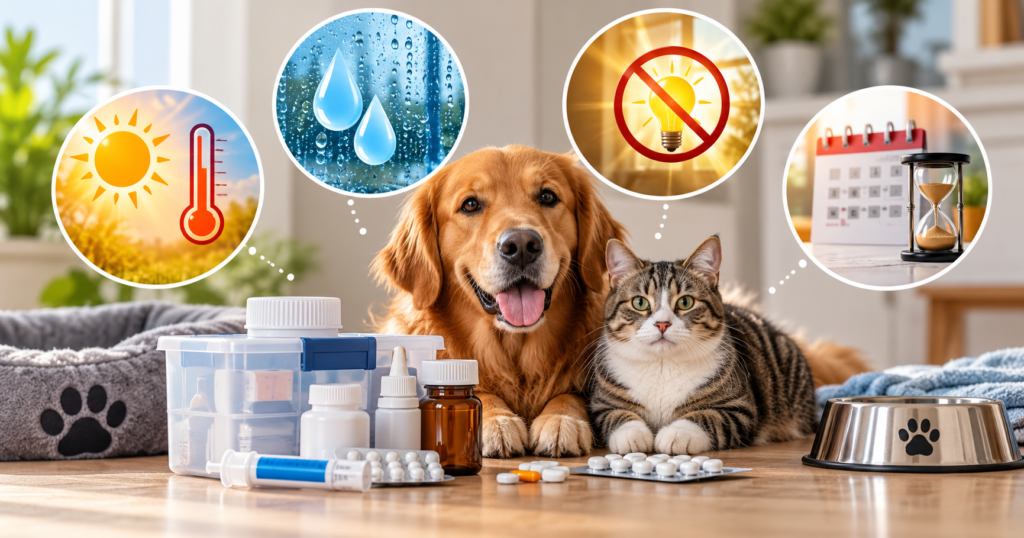
Pet Medication Storage Guide: Heat, Humidity, Light and Expiration
Store pet medications according to the label, usually in their original container, protected from inappropriate heat, cold, moisture and sunlight. Keep them securely out of reach of pets and children, separate pet and human medicines to prevent mix-ups, and dispose of expired or unwanted medicines appropriately.
Pet owners often search for a fast answer when something changes, but the safest answer is rarely a one-size-fits-all product recommendation. This guide explains pet medication storage in plain language, shows what information is useful to track, and helps U.S. pet owners know when professional veterinary care matters.
Why storage conditions matter
Medicines are tested for stability under defined conditions. Excessive heat, freezing, moisture or light can affect quality, and improper storage can make a product less reliable even before its printed expiration date.
Bathroom cabinet: convenient but not always ideal
Bathrooms can become warm and humid. Unless the label specifically permits those conditions, a dry, secure cabinet elsewhere may be more appropriate.
Hot cars and delivery boxes
Cars can heat rapidly, and parcels left in direct sun may reach temperatures far above room temperature. Check package condition on arrival and follow any product-specific temperature instructions.
Refrigerated medicines
If a product requires refrigeration, follow the labeled temperature range and avoid placing it where it may freeze. If refrigeration was interrupted for a meaningful period, ask the veterinarian or manufacturer whether the medicine is still usable.
Original containers reduce errors
FDA recommends keeping pet medicines in original labeled containers. This preserves the pet’s name, drug identity, directions, lot or pharmacy information and helps avoid confusing human and animal medicines.
Flavored medicines need extra security
Chewable veterinary medicines can smell like treats. A high shelf is not always enough for a determined dog; use a secure cabinet or other inaccessible storage.
Expiration and disposal
Do not rely on appearance alone to judge an expired medicine. FDA recommends drug take-back programs when available and provides disposal guidance for medicines that cannot be returned.
How this connects to MomasPets
MomasPets can help you review product details, pack information and pet-care options after you have identified what your pet actually needs. For prescription or condition-specific medication, follow your veterinarian’s recommendation and any applicable U.S. prescription requirements.
Looking for clearly labeled pet-care products and practical product information? Browse MomasPets and verify the exact product, strength, species and pack details before checkout. For veterinary medicines, use your veterinarian’s guidance as the deciding factor. |
Frequently Asked Questions
Can I store pet medicine in the kitchen?
Sometimes, if the location meets the labeled temperature/light requirements and is secure from pets, children, moisture and cooking heat.
What if a refrigerated medicine was left out overnight?
Do not guess. Contact the veterinarian, dispensing pharmacy or manufacturer with the product name, temperature and estimated time outside refrigeration.
Are child-resistant bottles pet-proof?
No. FDA notes that pets can chew through many medication containers. Secure storage is still necessary.
Can expired pet medicine be thrown in the trash?
Some medicines can be discarded in household trash using FDA-recommended steps, while others have special disposal instructions. Drug take-back is preferred when available.

About Us.
As pet parents ourselves, we’re devoted to the well-being of all pets in all situations. Our entire existence is dedicated to a “pet-first” mentality that seeks the most optimal outcomes in every situation.
Newsletter.


momaspet is proudly powered by WordPress