
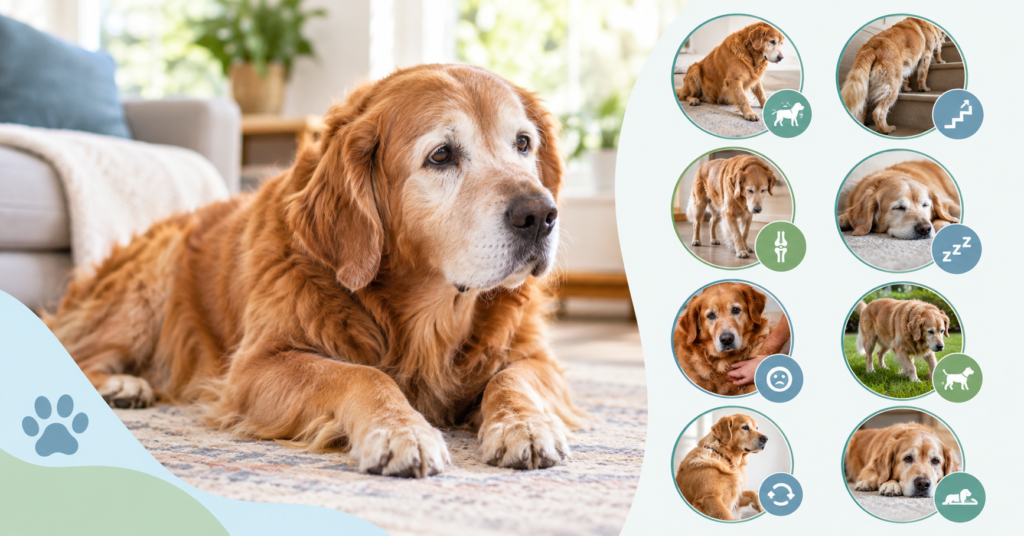
Senior Dog Mobility Changes: 8 Signs Your Dog May Be Uncomfortable
Senior dogs often slow down, but persistent stiffness, hesitation on stairs, trouble rising, shorter walks, reluctance to jump, altered posture, restlessness or reduced interest in normal activities may signal pain or mobility disease. Track changes over several days and discuss them with your veterinarian instead of assuming they are “just old age.” |
Pet owners often search for a fast answer when something changes, but the safest answer is rarely a one-size-fits-all product recommendation. This guide explains senior dog mobility changes in plain language, shows what information is useful to track, and helps U.S. pet owners know when professional veterinary care matters.
Eight mobility changes worth tracking
1. Taking longer to stand up
A dog that rocks forward, needs several attempts or uses furniture for support may be compensating for discomfort or weakness.
2. Hesitating on stairs
Pausing, taking stairs one at a time, refusing a familiar staircase or slipping more often can indicate reduced strength, joint range of motion or confidence.
3. Shorter or slower walks
A dog that turns home early, lags behind or needs more rest breaks may be telling you the current activity level is uncomfortable.
4. Avoiding jumps
Reluctance to jump into the car, onto a sofa or onto a bed can be an early mobility clue even when normal walking still looks good.
5. Changes in posture or gait
A stiff gait, shortened stride, head bob, uneven weight bearing or repeatedly shifting position deserves attention.
6. Restlessness at night
Difficulty getting comfortable, repeated position changes or waking more often can accompany discomfort.
7. Less enthusiasm for normal activities
Pain can look like “slowing down”: less play, less greeting at the door or less interest in walks.
8. New irritability when touched
A normally tolerant dog may avoid grooming, handling or being picked up when a body area hurts.
Why “just getting older” is not a diagnosis
Age increases the likelihood of osteoarthritis and other health problems, but mobility changes can also be caused by neurologic disease, muscle loss, injury, paw problems, endocrine disease and other conditions. A veterinary exam helps distinguish them.
What to track at home
Record how your dog rises, uses stairs, gets into the car, walks on different surfaces and behaves after exercise. Short videos are especially useful because dogs may move differently in the clinic than at home.
How veterinarians manage mobility discomfort
Management can include weight optimization, controlled exercise, rehabilitation, home modifications and veterinary pain medicines when appropriate. FDA notes that veterinary NSAIDs can have important side effects and should be used under veterinary supervision, with monitoring when recommended.
Home changes that can help
Non-slip rugs, ramps, supportive bedding, trimmed nails, good traction around food and water, and avoiding repeated high-impact jumps can make daily movement easier while you work with your veterinarian on the cause.
How this connects to MomasPets
MomasPets can help you review product details, pack information and pet-care options after you have identified what your pet actually needs. For prescription or condition-specific medication, follow your veterinarian’s recommendation and any applicable U.S. prescription requirements.
Looking for clearly labeled pet-care products and practical product information? Browse MomasPets and verify the exact product, strength, species and pack details before checkout. For veterinary medicines, use your veterinarian’s guidance as the deciding factor. |
Frequently Asked Questions
Is stiffness normal in an old dog?
Occasional slowing can occur with age, but repeated stiffness or difficulty with normal activities should be discussed with a veterinarian because treatable pain and disease are common in senior dogs.
Can I give my senior dog ibuprofen or naproxen?
Do not give human pain relievers unless a veterinarian specifically instructs you to. Some human NSAIDs can be dangerous for dogs.
What videos should I take for my vet?
Film your dog getting up from rest, walking away and toward you, using stairs if safe, and getting into the car or navigating a surface that has become difficult.
Can weight loss improve mobility?
For overweight dogs, reaching a healthier body condition can reduce mechanical stress on joints. Your veterinarian can help set a safe calorie and activity plan.

About Us.
As pet parents ourselves, we’re devoted to the well-being of all pets in all situations. Our entire existence is dedicated to a “pet-first” mentality that seeks the most optimal outcomes in every situation.


