
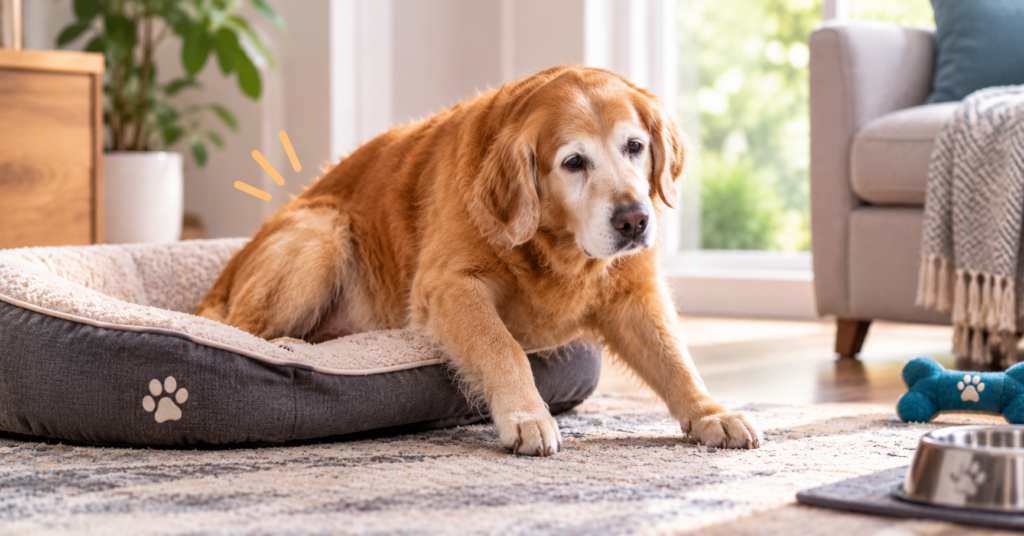
Why Does My Senior Dog Struggle to Get Up? What Pet Owners Should Watch
A senior dog may struggle to get up because of arthritis, muscle loss, back or neurologic disease, injury, paw pain or general weakness. Difficulty rising that is new, worsening, one-sided, associated with crying, collapse, dragging limbs or loss of bladder/bowel control needs prompt veterinary assessment. |
Pet owners often search for a fast answer when something changes, but the safest answer is rarely a one-size-fits-all product recommendation. This guide explains senior dog struggling to get up in plain language, shows what information is useful to track, and helps U.S. pet owners know when professional veterinary care matters.
Why getting up becomes difficult
Rising from the floor requires hip, knee, spine and core strength. Older dogs may have several small limitations at the same time, so the first sign can be a slow or awkward transition from lying down rather than an obvious limp.
Common patterns owners notice
Stiff for the first few steps
This pattern can occur with joint discomfort, especially after rest, but it is not specific enough to diagnose arthritis on its own.
Back legs slide outward
Weakness, pain or poor traction can all cause this. Try a non-slip surface and show your veterinarian a video of the movement.
Needs several attempts to rise
Repeated rocking or repositioning suggests the movement is difficult and should be evaluated if it persists.
Can walk once standing
Being able to walk after standing does not rule out pain or disease. The transition itself may be the hardest part.
Red flags that need faster care
Seek urgent care for sudden inability to stand, collapse, severe pain, limb dragging, knuckling, major trauma, pale gums, breathing difficulty, or new loss of bladder/bowel control.
What your veterinarian may evaluate
The exam may assess joints, spine, neurologic reflexes, muscle mass, paws, heart/lung status and overall health. Depending on findings, imaging or lab work may be recommended.
How to make getting up safer today
Use non-slip rugs or yoga mats, keep nails and paw hair trimmed, provide a supportive bed that is not excessively deep, and use ramps rather than repeated jumping where possible. Avoid forcing exercise through pain.
About pain medication
Prescription veterinary pain medicines can be very helpful for the right dog. FDA advises pet owners to use NSAIDs under veterinary direction and to watch for adverse effects. Never substitute a human pain medicine without veterinary guidance.
How this connects to MomasPets
MomasPets can help you review product details, pack information and pet-care options after you have identified what your pet actually needs. For prescription or condition-specific medication, follow your veterinarian’s recommendation and any applicable U.S. prescription requirements.
Looking for clearly labeled pet-care products and practical product information? Browse MomasPets and verify the exact product, strength, species and pack details before checkout. For veterinary medicines, use your veterinarian’s guidance as the deciding factor. |
Frequently Asked Questions
Why is my dog stiff only after sleeping?
Rest can make stiffness more noticeable, but the pattern can have several causes. If it happens repeatedly or is worsening, ask your veterinarian to evaluate mobility.
Are weak back legs always arthritis?
No. Orthopedic, neurologic, muscular and systemic conditions can all cause hind-limb weakness.
Should I make my senior dog walk more?
Gentle, consistent activity may be useful for many senior dogs, but the right amount depends on the diagnosis. Sudden increases in exercise can worsen some conditions.
What is the best flooring for an older dog?
Stable, non-slip surfaces are usually easier than polished tile or hardwood. Runners and washable traction mats can improve confidence around common walking routes.

About Us.
As pet parents ourselves, we’re devoted to the well-being of all pets in all situations. Our entire existence is dedicated to a “pet-first” mentality that seeks the most optimal outcomes in every situation.


