
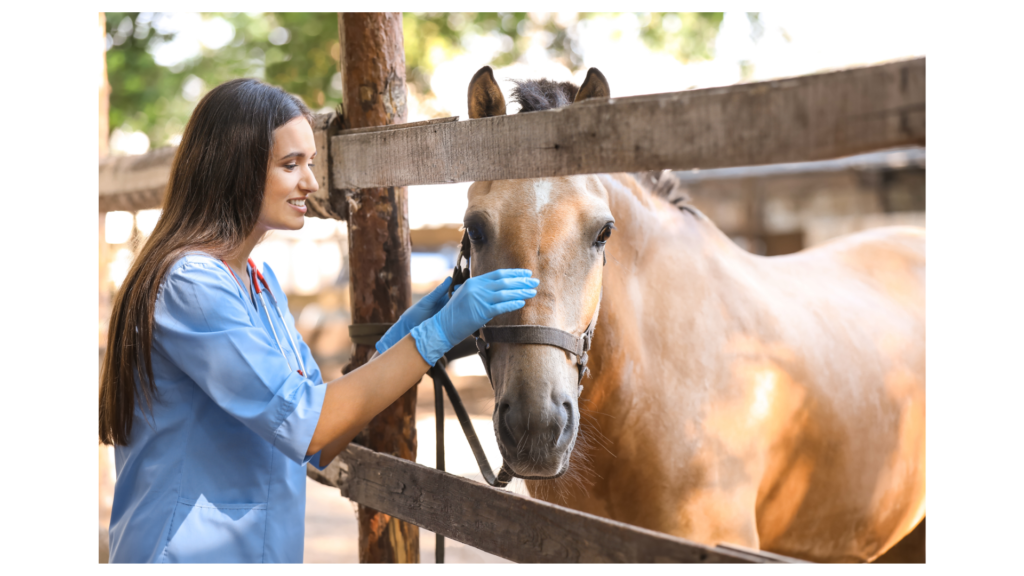
Fly strike in horses happens when flies lay eggs in an open wound, moist skin fold, or soiled coat, and the hatched larvae feed on the tissue. It is most common in warm, humid weather on wounds that go unnoticed for a day or two. Treatment requires clipping the area, removing larvae, and applying a larvicidal wound powder such as Negasunt under vet guidance.
Medically reviewed by Dr. Dinesh Moliya, B.V.Sc & A.H, M.V.Sc & A.H — 16 years of clinical veterinary experience.
Fly strike is one of the most preventable but fastest-moving wound complications in horses. A small cut that goes unnoticed for 24–48 hours in warm weather can attract flies, and once eggs hatch the situation escalates quickly. Here’s what every horse owner should know about spotting it early and treating it correctly.
Fly strike occurs when certain fly species are attracted to an open wound, matted or soiled coat, or areas of persistent moisture such as under a rug or around the sheath and tail base. The flies lay eggs directly on the affected tissue, and within hours the eggs hatch into larvae that begin feeding on the surrounding skin.
Risk climbs sharply in warm, humid conditions and around any wound — including surgical sites, saddle sores, and old scabbed injuries — that isn’t checked and dressed daily.
Once fly strike is confirmed, the area needs to be clipped back so the wound is fully visible, gently cleaned, and any larvae physically removed — this is typically done by or under the direction of a vet, since larvae can burrow deeper than they appear.
After cleaning, a larvicidal and antiseptic dusting powder is applied to kill remaining larvae and eggs and to discourage flies from returning while the wound heals. Negasunt Dusting Powder is formulated for exactly this use, combining an insecticidal agent with an antimicrobial to address both the infestation and the risk of secondary infection in the same application.
Wound / Area | Risk Level | Why |
|---|---|---|
Fresh open wound | High | Moist tissue is highly attractive to egg-laying flies |
Surgical incision | High | Often left unmonitored for longer stretches |
Saddle or girth sore | Medium | Repeated friction keeps the area raw and moist |
Old healed scar | Low | Dry, closed skin is far less attractive to flies |
🛍️ SHOP THIS PRODUCT Negasunt Dusting Powder — vet-grade larvicidal and antiseptic powder for active fly strike and wound protection in horses. View & order: shop.momaspets.com/product/negasunt-dusting-powder/ |
How fast can fly strike develop on a horse wound?
Fly eggs can hatch into feeding larvae within 12–24 hours in warm weather, which is why any wound needs daily checking during fly season rather than occasional glances.
Can I treat fly strike at home without a vet?
Minor early-stage cases can sometimes be managed with prompt clipping, cleaning, and a larvicidal powder, but any wound with visible larvae, spreading swelling, or a strong odor needs a vet assessment the same day.
Is Negasunt safe to use on open wounds?
Yes — Negasunt is specifically formulated for wound and skin infestations in horses and is applied directly to the clipped, cleaned wound area under label or veterinary guidance.
What time of year is fly strike most common?
Warm, humid months see the sharpest rise in cases, though any wound left unchecked can be at risk whenever flies are active in your region.
Does fly strike only affect open wounds?
No — flies can also target soiled or matted areas of the coat, the sheath, and the tail base, even without a visible wound present.
How long does it take a fly strike wound to heal?
Healing time depends on wound size and depth, but most cases treated promptly with clipping, cleaning, and antiseptic dusting powder show visible improvement within 5–7 days.
Can fly strike become life-threatening?
Left untreated, extensive larval feeding can lead to serious tissue damage and secondary infection, so any suspected case should be treated as urgent rather than watched and waited on.
👨⚕️ NOT SURE WHAT’S GOING ON? Book a free online consultation with Dr. Dinesh Moliya (B.V.Sc & A.H, M.V.Sc & A.H, 16 years clinical experience) at momaspets.com — get a vet’s read on your pet’s symptoms before you decide on treatment. |
As pet parents ourselves, we’re devoted to the well-being of all pets in all situations. Our entire existence is dedicated to a “pet-first” mentality that seeks the most optimal outcomes in every situation.
momaspet is proudly powered by WordPress



