
momaspet
Online Pet Consultancy & Veterinary Guidance
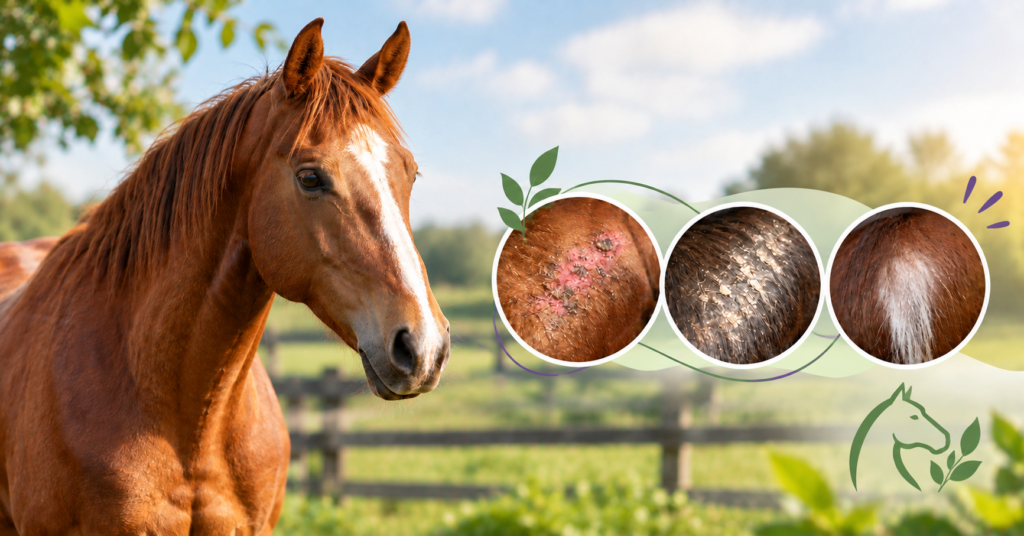
Skin & Coat Problems in Horses: When to Worry
Medically Reviewed by Dr. Dinesh Moliya, B.V.SC & A.H, M.V.SC & A.H — 16 Years of Clinical Veterinary Experience | MomasPets
QUICK ANSWER A horse’s coat often reflects what’s happening at the skin level. Occasional dust or mild dullness is usually harmless, but flaking, recurring bald patches, odor, or persistent irritation point to a skin condition that needs a vet-guided shampoo routine or diagnosis, not just extra brushing. |
Coat condition is one of the easiest things to overlook in a horse — a bit of dullness gets blamed on dust, weather, or diet. But recurring flaking, patchy hair loss, or a coat that never quite looks right is often the skin telling you something before more obvious symptoms show up.
Normal vs. Something Worth Watching
- Normal: light dust or debris that brushes off easily and doesn’t return the next day.
- Worth watching: flaking that returns quickly after grooming, odor, or a patch that keeps recurring in the same spot.
- Worth watching: any area the horse repeatedly rubs, bites, or scratches at.
- Worth watching: hair loss with visible redness or crusting underneath.
Common Causes of Coat and Skin Issues
- Fungal or bacterial skin conditions, often worsened by damp conditions or shared tack
- Allergic reactions to insect bites, bedding, or environmental triggers
- Poor grooming routine allowing dirt and sweat buildup
- Underlying nutritional gaps affecting coat quality
Building a Proper Skin-Care Routine
A medicated shampoo routine, used as directed and alongside a vet’s guidance, can help manage recurring skin irritation while the underlying cause is identified. This isn’t a one-time fix — consistency in cleaning, drying, and monitoring matters as much as the product itself.
🛒 SHOP: Pendistrin SH A medicated shampoo used as part of a vet-guided skin care routine for horses dealing with coat or skin irritation. |
🩺 NOT SURE WHAT’S GOING ON? Book a free online consult with Dr. Moliya before starting any treatment. Get a clear answer, not a guess. |
Frequently Asked Questions
Why does my horse’s coat look dull even though I groom regularly?
Dullness can come from dust, weather, or diet, but if it persists despite regular grooming it’s worth checking for an underlying skin condition or nutritional gap.
Is flaking on a horse’s coat normal?
Light flaking that brushes off and doesn’t return quickly is usually harmless. Flaking that keeps coming back in the same spot is worth a closer look.
What causes recurring skin patches in horses?
Fungal or bacterial skin conditions, insect-bite allergies, and poor grooming hygiene are common causes of patches that keep returning in the same area.
Can a medicated shampoo fix a skin condition on its own?
It supports management as part of a full routine, but persistent or worsening skin issues should be diagnosed by a vet to confirm the underlying cause.
How can I tell if my horse’s skin issue is contagious?
Contagious skin conditions often spread to other horses sharing tack, bedding, or grooming tools — if multiple horses develop similar patches, isolate tack and consult a vet.
How often should I use a medicated shampoo on my horse?
Frequency depends on the specific condition and product instructions — always follow label directions and your vet’s guidance rather than over-washing.
When should I stop trying home care and call a vet?
If the area isn’t improving after a week of consistent care, is spreading, or shows odor, crusting, or redness, it’s time for a proper diagnosis.
Related Reading
- Fly Strike & Wound Infestation in Horses: Prevention Guide
- Horse Deworming Schedule: What Vets Recommend
- Mange in Dogs: Treatment Guide
Medical Disclaimer: This article is for general educational purposes and does not replace a hands-on veterinary examination. Dosage, diagnosis, and treatment must be confirmed by a licensed veterinarian based on your pet’s specific condition, weight, and health history. If your pet is showing severe or worsening symptoms, seek in-person veterinary care immediately.

About Us.
As pet parents ourselves, we’re devoted to the well-being of all pets in all situations. Our entire existence is dedicated to a “pet-first” mentality that seeks the most optimal outcomes in every situation.
Newsletter.


momaspet is proudly powered by WordPress