
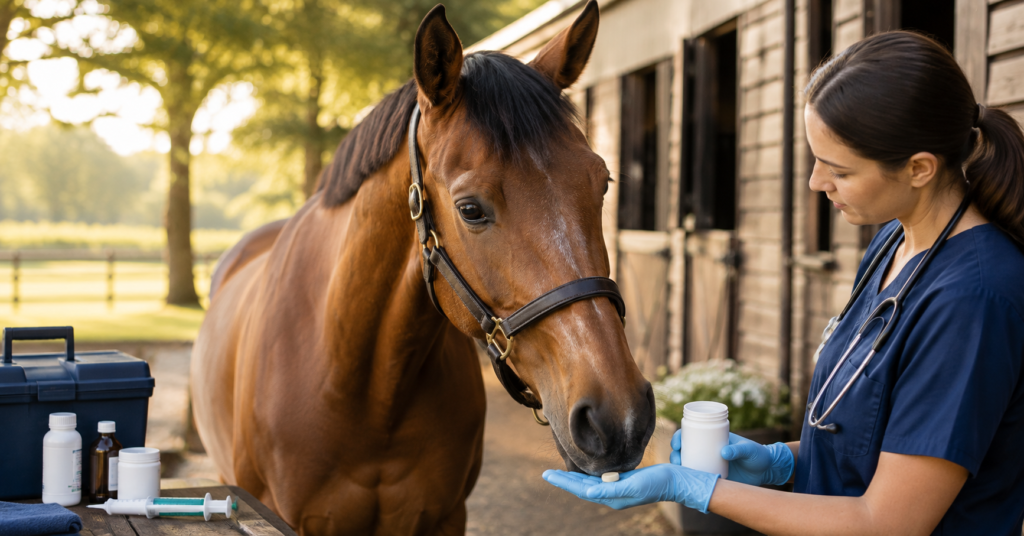
QUICK ANSWER Most horses need deworming 2 to 4 times a year, timed around fecal egg counts rather than a fixed calendar. A vet-guided schedule targets the specific parasites present, rotates active ingredients to prevent resistance, and adjusts for age, pasture density, and season. |
A horse that looks healthy can still be carrying a heavy parasite load. Left unmanaged, worms damage the gut lining, cause weight loss, dull the coat, and in severe cases trigger colic. A proper deworming schedule isn’t about deworming on a random calendar date — it’s about testing, timing, and choosing the right product for the parasites actually present.
Deworming every horse on the same date regardless of their actual parasite load is one of the biggest drivers of dewormer resistance in equine parasites today. A horse with a low egg count doesn’t need the same treatment as a horse with a heavy burden.
Fecal egg count testing gives your vet the real picture. From there, a schedule can be built around what’s actually present — strongyles, roundworms, tapeworms, or bots — instead of guessing.
Rotating dewormer classes isn’t about switching brands randomly — it’s about targeting different parasite life stages and reducing the chance of resistance building up in your herd or yard. Your vet will typically base rotation on fecal results, not a fixed rule of thumb.
🩺 NOT SURE WHAT’S GOING ON? Book a free online consult with Dr. Moliya before starting any treatment. Get a clear answer, not a guess. |
How often should I deworm my horse?
Most adult horses need deworming 2–4 times a year, guided by a fecal egg count rather than a fixed date. Foals and high-shedding horses may need more frequent monitoring.
What happens if I don’t deworm my horse regularly?
Unmanaged parasite loads can cause weight loss, poor coat condition, digestive damage, and in severe cases colic. Regular monitoring catches problems before they become serious.
Can I use the same dewormer every time?
Repeated use of the same product without testing increases the risk of resistance. Rotation should be based on fecal results and guided by your veterinarian, not done at random.
Is a fecal egg count necessary before deworming?
Yes — it’s the most reliable way to know which parasites are present and how heavy the burden is, so treatment can be targeted instead of guessed.
Do foals need a different deworming schedule than adult horses?
Yes. Foals are more vulnerable to roundworm infections and typically need closer monitoring and a different treatment timeline than adult horses.
What are signs my horse may have worms?
Watch for weight loss, a dull or rough coat, a pot-bellied appearance in young horses, recurring mild colic, or visible worms in manure.
Can deworming boluses replace a vet visit?
No. Boluses are one part of a parasite control program. A vet should confirm which parasites are present and how often treatment is actually needed.
When is the best time of year to deworm horses?
Late fall or early winter treatments are often used to target bots and encysted strongyles, but exact timing should follow your vet’s fecal testing schedule.
Medical Disclaimer: This article is for general educational purposes and does not replace a hands-on veterinary examination. Dosage, diagnosis, and treatment must be confirmed by a licensed veterinarian based on your pet’s specific condition, weight, and health history. If your pet is showing severe or worsening symptoms, seek in-person veterinary care immediately.
As pet parents ourselves, we’re devoted to the well-being of all pets in all situations. Our entire existence is dedicated to a “pet-first” mentality that seeks the most optimal outcomes in every situation.
momaspet is proudly powered by WordPress



