
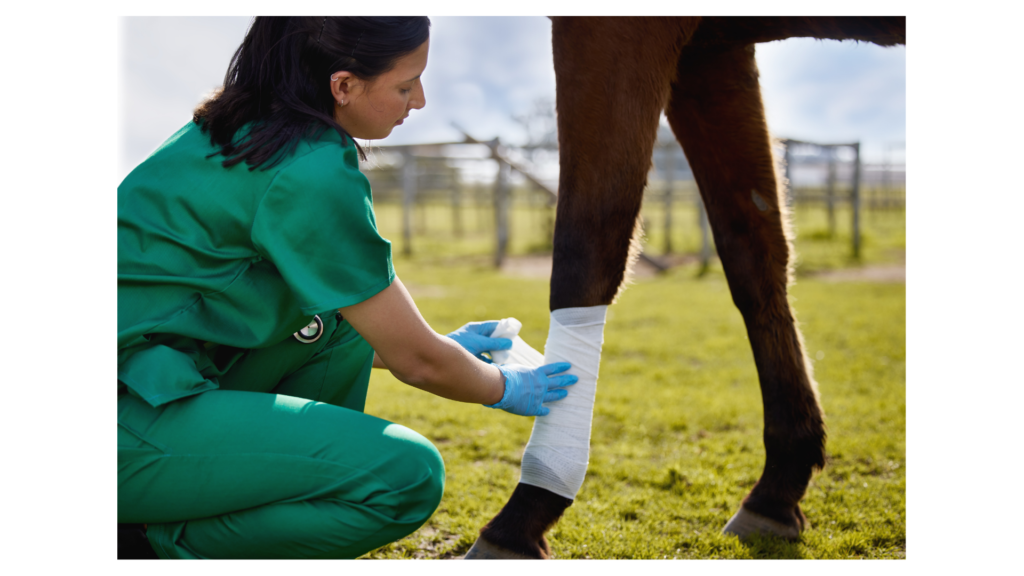
Basic horse wound care involves rinsing the wound with clean water or saline, gently removing debris, applying an antiseptic such as povidone-iodine solution, and covering the area if it’s in a location prone to dirt or fly exposure. Deep wounds, wounds near joints, heavy bleeding, or any wound showing swelling or discharge after 48 hours need veterinary assessment.
Medically reviewed by Dr. Dinesh Moliya, B.V.Sc & A.H, M.V.Sc & A.H — 16 years of clinical veterinary experience.
Horses are prone to cuts, scrapes, and puncture wounds simply from daily turnout and activity. Most minor wounds can be safely managed at home with the right first steps — but knowing which wounds need a vet, and when, is what actually prevents complications like infection or fly strike.
Rinse with clean water or saline to flush out loose debris, working from the wound outward. Avoid scrubbing directly into the wound bed, which can damage healthy tissue.
Once rinsed, apply an antiseptic solution such as povidone-iodine, which is effective against a broad range of bacteria without being excessively harsh on healing tissue when used at the correct dilution.
Wounds on the lower leg, near the ground, or in fly-prone areas generally benefit from a clean, breathable dressing to keep dirt and insects out. Wounds on the body that are clean and shallow are often left open to air-dry, since excess moisture under a dressing can actually slow healing.
Wound Sign | Home Care OK? | Action |
|---|---|---|
Small shallow scrape | Yes | Clean, antiseptic, monitor daily |
Puncture wound | No | Vet visit — depth can’t be assessed by eye |
Wound over a joint | No | Vet visit same day |
Mild swelling that fades in 24h | Yes | Continue home care, keep monitoring |
Discharge or odor | No | Vet visit — possible infection or fly strike |
🛍️ SHOP THIS PRODUCT Providone-Iodine Solution — broad-spectrum antiseptic wound solution suitable for routine horse wound cleaning. View & order: shop.momaspets.com/product/providone-iodine-solution/ |
What’s the best first step for a fresh horse wound?
Rinse thoroughly with clean water or saline to remove debris before applying anything else — cleaning always comes before antiseptic application.
Can I use human antiseptic on a horse wound?
Some human antiseptics are too harsh for equine tissue or the wrong concentration; a veterinary-labelled solution like povidone-iodine formulated for animal use is the safer choice.
Should I always cover a horse wound?
Not always — clean, shallow wounds on the body often heal better uncovered, while lower-leg or fly-exposed wounds usually benefit from a breathable dressing.
How long before an untreated wound risks fly strike?
In warm weather, an unmonitored wound can attract egg-laying flies within 24 hours, which is why daily checks matter even for minor injuries.
When is a wound considered an emergency?
Uncontrolled bleeding, wounds near a joint, embedded foreign material, or a lame horse are all reasons to call a vet immediately rather than wait and monitor.
How often should I redress a horse wound?
Most dressings are changed once daily, though your vet may recommend more frequent changes for wounds with higher drainage or contamination risk.
Can a minor wound become serious if ignored?
Yes — even small wounds can develop infection or fly strike within days if left unchecked, which is why daily monitoring matters more than the wound’s initial size.
👨⚕️ NOT SURE WHAT’S GOING ON? Book a free online consultation with Dr. Dinesh Moliya (B.V.Sc & A.H, M.V.Sc & A.H, 16 years clinical experience) at momaspets.com — get a vet’s read on your pet’s symptoms before you decide on treatment. |
As pet parents ourselves, we’re devoted to the well-being of all pets in all situations. Our entire existence is dedicated to a “pet-first” mentality that seeks the most optimal outcomes in every situation.
momaspet is proudly powered by WordPress



