
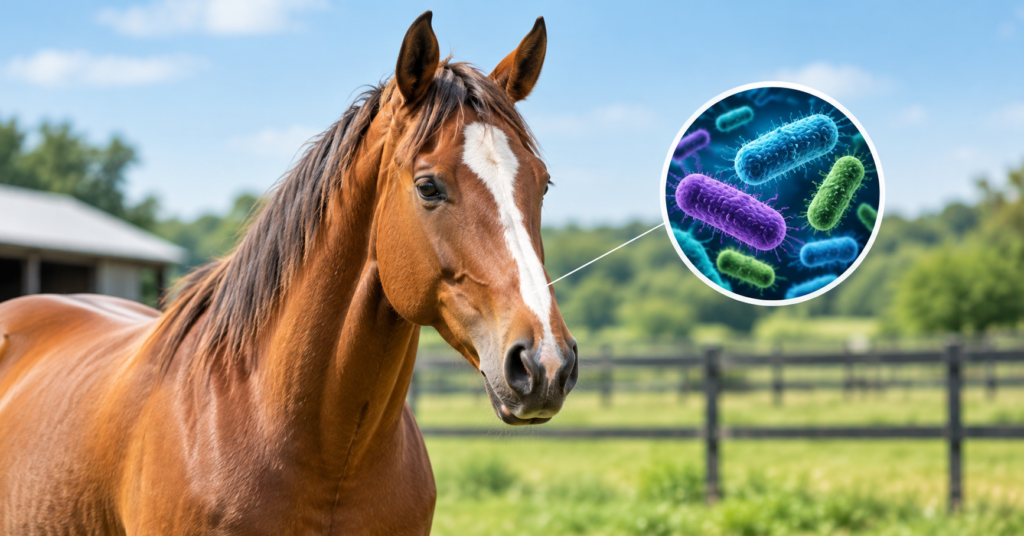
Bacterial Infections in Livestock: Herd Health Guide
Medically Reviewed by Dr. Dinesh Moliya, B.V.SC & A.H, M.V.SC & A.H — 16 Years of Clinical Veterinary Experience | MomasPets
QUICK ANSWER Bacterial infections in livestock and horses are usually confirmed through clinical signs plus a vet exam, then treated with a targeted antimicrobial based on body weight and the specific infection. A proper herd health routine focuses on early detection, correct dosing, and full treatment courses to avoid resistance. |
Treating livestock isn’t guesswork, even when the animal is otherwise healthy and the symptoms seem minor. A bacterial infection that’s caught early and treated correctly resolves cleanly. One that’s guessed at, under-dosed, or stopped early can turn into a much bigger problem for the whole herd.
How a Treatment Decision Actually Gets Made
- Step 1 — Confirm the condition: symptoms alone aren’t enough to justify treatment; a vet exam identifies what’s actually happening.
- Step 2 — Match treatment to the confirmed cause, not a guess based on similar past cases.
- Step 3 — Set the correct dose and duration for the animal’s size, species, and condition.
- Step 4 — Monitor and follow up to confirm the infection has actually cleared.
Common Signs Worth Investigating
- Fever or noticeable lethargy in an otherwise active animal
- Reduced appetite or reduced feed/water intake
- Localized swelling, discharge, or heat at a specific site
- Reduced performance or productivity without an obvious cause
Why Full Courses Matter More in Herd Settings
Stopping treatment early doesn’t just risk relapse in one animal — in a herd or stable setting, incompletely treated bacterial infections contribute to resistance that affects future treatment options for the whole group. Following the full prescribed duration protects more than just the individual animal.
Building a Basic Herd Health Routine
- Regular observation for early symptoms, not just when something looks obviously wrong
- A consistent relationship with a vet who knows your herd’s history
- Keeping treatment records so patterns and recurring issues are easier to catch
- Isolating and treating sick animals promptly to limit spread
🛒 SHOP: Oriprim Vet Bolus An antimicrobial bolus used under veterinary guidance for the treatment of confirmed bacterial infections in horses and livestock. |
🛒 SHOP: Allergo Plus Bolus Used by some vets as part of a proactive seasonal care plan for horses dealing with recurring allergic or skin flare-ups. |
🩺 NOT SURE WHAT’S GOING ON? Book a free online consult with Dr. Moliya before starting any treatment. Get a clear answer, not a guess. |
Frequently Asked Questions
How are bacterial infections confirmed in livestock?
Through a combination of observed clinical signs and a veterinary exam — symptoms alone aren’t enough to confirm a bacterial cause.
What are early signs of infection in horses or livestock?
Fever, lethargy, reduced appetite, localized swelling or discharge, and reduced performance without an obvious cause are all worth investigating.
Why does antibiotic course length matter in herd settings?
Stopping treatment early can lead to relapse and contributes to antibiotic resistance that affects future treatment options across the whole herd.
How is antimicrobial dosage determined for livestock?
Dosage is set based on the animal’s weight, species, and the specific infection, always determined by a veterinarian.
Can I treat a suspected infection without a vet exam?
It’s not recommended — treating the wrong cause wastes time and can allow the actual infection to progress.
What does a basic herd health routine include?
Regular observation, a consistent vet relationship, treatment record-keeping, and prompt isolation of sick animals to limit spread.
Are boluses used for both treatment and prevention?
Some are used for confirmed infections, others as part of a broader wellness or seasonal care routine — your vet can advise which applies to your situation.
Related Reading
- Horse Deworming Schedule: What Vets Recommend
- Skin & Coat Problems in Horses: When to Worry
- Fly Strike & Wound Infestation in Horses: Prevention Guide
Medical Disclaimer: This article is for general educational purposes and does not replace a hands-on veterinary examination. Dosage, diagnosis, and treatment must be confirmed by a licensed veterinarian based on your pet’s specific condition, weight, and health history. If your pet is showing severe or worsening symptoms, seek in-person veterinary care immediately.

About Us.
As pet parents ourselves, we’re devoted to the well-being of all pets in all situations. Our entire existence is dedicated to a “pet-first” mentality that seeks the most optimal outcomes in every situation.


