
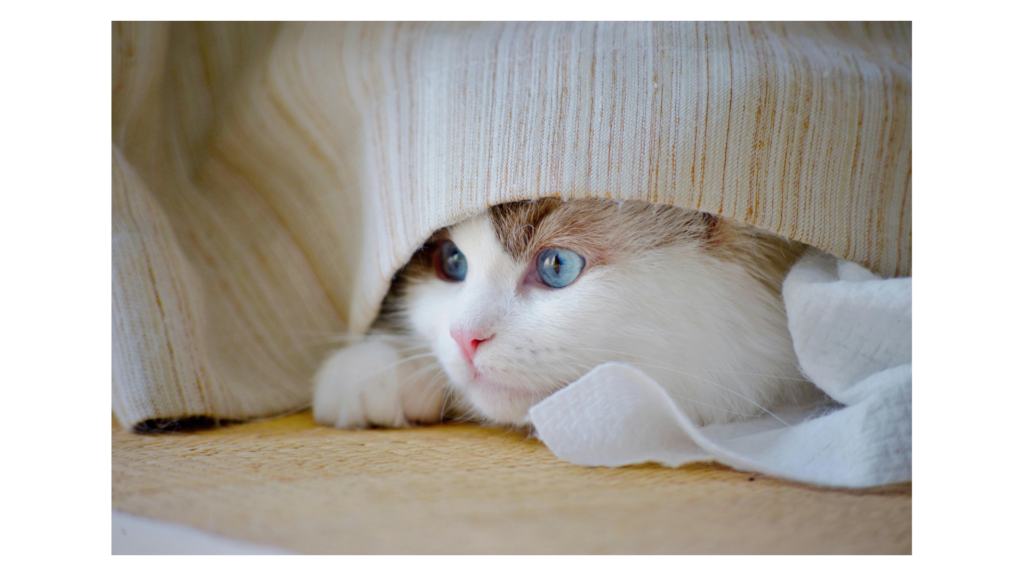
Anxiety in cats is a genuine medical condition that causes behavioural and physical changes including hiding, excessive vocalisation, over-grooming, inappropriate urination, and aggression. Common triggers include changes in environment, new people or pets, loud noises, and separation from owners. Treatment involves environmental enrichment, behaviour modification, and in moderate to severe cases, veterinary anti-anxiety medication. Untreated anxiety worsens over time.
Cats are often described as independent and self-sufficient — but beneath that composed exterior, many cats carry significant anxiety that goes unrecognised for months or years. Unlike dogs, anxious cats rarely make a fuss. They withdraw, hide, and quietly change their behaviour in ways that owners often attribute to personality rather than distress. If your cat seems ‘difficult,’ ‘aloof,’ or has developed habits like over-grooming or urinating outside the litter box, anxiety may be at the root. This guide explains what cat anxiety actually looks like, what causes it, and what genuinely helps.
Cats express anxiety very differently from dogs. The signs are often subtle and easy to miss unless you know what to look for:
Cats are creatures of habit and are acutely sensitive to changes in their environment. Common anxiety triggers include:
Trigger | Why It Causes Anxiety |
|---|---|
Moving home | Cats are territorial — new spaces with unfamiliar smells feel threatening |
New pet in the household | Perceived competition for territory, food, and owner attention |
New baby or new person | Change in household routine and unfamiliar presence |
Building work or loud noises | Cats are acutely sensitive to sound and vibration |
Fireworks or thunderstorms | Unpredictable, intense noise triggers acute fear response |
Change in owner’s routine | Cats bond to routine — working from home ending, shift changes |
Veterinary visits | Car travel + handling by strangers in an unfamiliar clinical environment |
Separation from owner | Some cats develop genuine separation anxiety, particularly single-cat households |
Illness or pain | Medical conditions cause anxiety secondarily — rule this out first |
The foundation of anxiety management in cats is enriching their environment so they feel safe, in control, and mentally stimulated:
For anxiety linked to specific triggers — like visitors, loud noises, or other pets — gradual desensitisation can help. This involves carefully and very slowly increasing exposure to the trigger at a level that doesn’t provoke fear, using high-value food rewards to build a positive association. A veterinary behaviourist can guide this process for complex cases.
For moderate to severe anxiety that doesn’t respond to environmental and behavioural approaches alone, veterinary medication provides real relief. These medications are not sedatives — they reduce the underlying neurological overactivation that drives anxiety, allowing the cat to respond to behaviour modification.
🛒 Vet-Recommended: Calmatonine XR for Cats Veterinary-formulated extended-release calming supplement for cats with anxiety, stress-related behaviour, and noise phobias. Supports the nervous system naturally. Use under vet guidance for best results. Order now → https://shop.momaspets.com/product/calmatonine-xr/ |
🛒 Vet-Recommended: Anxocare Vet Tablets Herbal veterinary anxiolytic for cats and dogs. Helps reduce anxiety, aggression, and stress-related behaviour without causing sedation. Suitable for situational anxiety (travel, fireworks, vet visits) and chronic cases. Order now → https://shop.momaspets.com/product/anxocare-vet-tablets/ |
Anxiety is significantly more common in cats who live with other cats they haven’t chosen to be with. Cats are solitary hunters by nature and not inherently social with their own species. Signs of feline social stress include:
Management involves providing enough resources for all cats plus one extra (food stations, litter trays, resting spots), separating cats who genuinely cannot coexist, and considering veterinary assessment for the most affected cat.
Always rule out a medical cause first. Pain, hyperthyroidism, urinary tract infection, and cognitive dysfunction in older cats all present with behavioural signs that look exactly like anxiety.
🩺 Not sure what’s wrong with your pet? Book a FREE online consultation with Dr. Dinesh Moliya (B.V.SC & A.H, M.V.SC & A.H, 16 years clinical experience) and get expert vet advice from home. Book Free Consult → https://momaspets.com/online-vet-consultation/ |
Q: How do I know if my cat has anxiety?
A: Anxious cats typically hide more, over-groom, use the bathroom outside the litter box, vocalise excessively, or become aggressive with little provocation. Physical signs like vomiting, diarrhoea, and hair loss can also have anxiety as a root cause. A vet visit helps rule out medical causes and confirm an anxiety diagnosis.
Q: What is the most common cause of anxiety in cats?
A: Changes to a cat’s environment or routine are the most common triggers — moving home, a new pet or person in the household, building work, or a change in owner schedule. Cats are highly territorial and sensitive to environmental change. Multi-cat households where cats don’t coexist harmoniously are also a major source of chronic stress.
Q: Can cat anxiety go away on its own?
A: Situational anxiety triggered by a specific event — like a fireworks night — often resolves once the trigger is gone. Chronic anxiety from an unresolved source, such as conflict with another cat or a sustained change in routine, does not resolve on its own and typically worsens over time without intervention.
Q: Are there natural remedies for cat anxiety?
A: Feliway pheromone diffusers, environmental enrichment (hiding spots, elevated perches, interactive play), and herbal veterinary supplements like Calmatonine XR and Anxocare Vet provide natural support for mild to moderate anxiety. These work best combined with behavioural approaches. Severe anxiety requires veterinary-prescribed medication.
Q: Is anti-anxiety medication safe for cats?
A: Yes — when prescribed by a vet and used at the correct dose. Veterinary anti-anxiety medications for cats are carefully selected to provide neurological relief without causing sedation or organ damage with appropriate monitoring. Long-term use in some cats is safe and significantly improves quality of life.
Q: Can I give my cat human anxiety medication?
A: No. Human benzodiazepines, antidepressants, and other anxiety medications can be dangerous or fatal in cats at human doses. Cats metabolise drugs very differently from humans. Only use veterinary-prescribed or veterinary-approved medications in cats.
Q: Does neutering help with cat anxiety?
A: Neutering reduces anxiety and aggression related to hormonal drives — particularly territorial marking and competition with other cats. However, it does not resolve anxiety caused by environmental triggers, trauma history, or learned fear responses. These require behaviour management in addition to neutering.
As pet parents ourselves, we’re devoted to the well-being of all pets in all situations. Our entire existence is dedicated to a “pet-first” mentality that seeks the most optimal outcomes in every situation.
momaspet is proudly powered by WordPress



