
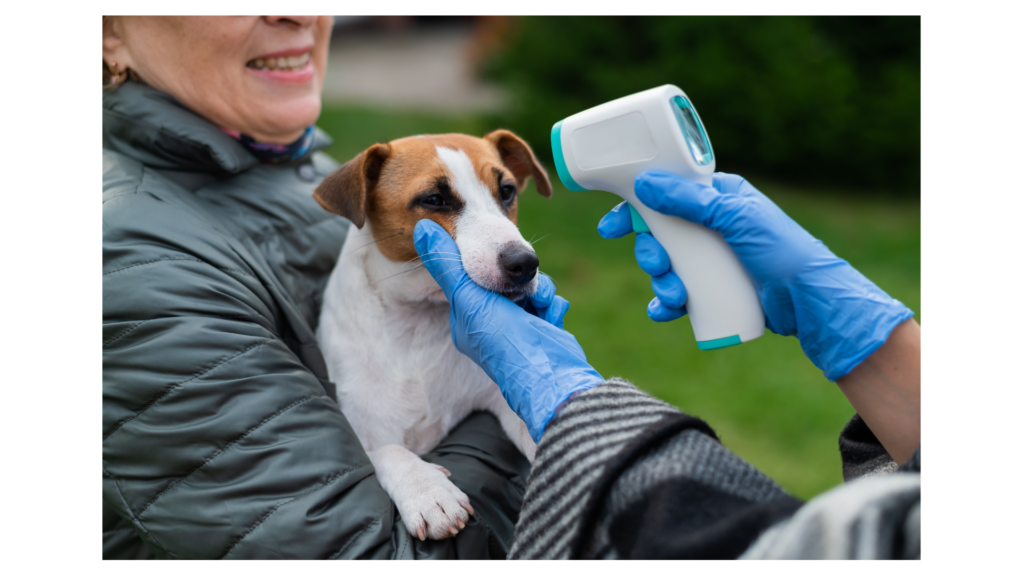
A dog has a fever when its rectal temperature reaches 103°F (39.4°C) or above. Normal dog temperature is 101°F–102.5°F (38.3°C–39.2°C). Fever is the immune system’s response to infection or inflammation. Common causes include bacterial infections, viral illness, vaccine reactions, and inflammatory conditions. Any fever above 104°F (40°C) requires same-day veterinary attention. A temperature of 106°F (41.1°C) is a medical emergency.
When your dog seems off — quieter than usual, not interested in food, or just not themselves — fever is one of the first things worth considering. Unlike humans, dogs can’t tell you they feel hot or achy, and their fur makes it impossible to judge temperature by touch alone. This guide covers how to tell if your dog has a fever, what’s causing it, what you can safely do at home, and when a vet visit cannot wait.
A dog’s normal body temperature sits between 101°F and 102.5°F (38.3°C–39.2°C). This is measured rectally — the only accurate method.
Temperature | What It Means |
|---|---|
99°F–100°F (37.2–37.8°C) | Below normal — hypothermia possible. Contact your vet. |
101°F–102.5°F (38.3–39.2°C) | Normal range — no concern |
102.6°F–103°F (39.2–39.4°C) | Borderline — monitor closely for 12–24 hours |
103°F–104°F (39.4–40°C) | Fever — call your vet for same-day advice |
104°F–106°F (40–41.1°C) | High fever — same-day vet visit required |
Above 106°F (41.1°C) | Medical emergency — organ damage risk. Go to vet immediately |
The most reliable way to take a dog’s temperature is with a digital rectal thermometer. Ear thermometers designed for humans are not accurate in dogs. If you don’t have a thermometer, do not try to judge fever by feel — the ears and nose are unreliable indicators.
Because you can’t feel a dog’s forehead the way you would a child’s, look for these behavioural and physical changes:
No single sign confirms fever — the only way to know for sure is to take your dog’s temperature with a rectal thermometer.
Infections are the most common trigger for fever in dogs. The immune system raises body temperature to slow bacterial or viral replication.
A mild, low-grade fever in the 24–48 hours following a vaccination is completely normal — it indicates the immune system is mounting a response, which is exactly what the vaccine is designed to trigger. Post-vaccination fever is typically below 104°F and resolves without treatment within 1–2 days. If fever exceeds 104°F, persists beyond 48 hours, or is accompanied by swelling or difficulty breathing, contact your vet immediately.
Non-infectious inflammation from conditions like immune-mediated disease, pancreatitis, or inflammatory bowel disease can also cause fever without an obvious external source of infection. These are sometimes labelled FUO — Fever of Unknown Origin — and require a full diagnostic workup.
Certain toxins, including some human medications (like acetaminophen/paracetamol), some plant toxins, and certain chemicals, cause fever as part of a toxic reaction. If you suspect your dog has ingested something toxic and has a fever, treat it as an emergency.
If your dog’s temperature is between 103°F and 104°F and they are otherwise alert, drinking, and not vomiting, you can try these steps while you arrange to speak with your vet:
IMPORTANT: Never give your dog human fever medications. Paracetamol (acetaminophen/Tylenol) is highly toxic to dogs and can cause fatal liver failure. Ibuprofen and aspirin also cause serious harm. Only use veterinary-prescribed pain relief and fever medications.
🛒 Vet-Recommended: Himpyrin for Dogs Veterinary-formulated analgesic and antipyretic for dogs. Used under vet supervision for fever management and pain relief in dogs. Do not use without veterinary guidance — dose is weight-based. Order now → https://shop.momaspets.com/product/himpyrin/ |
At the clinic, your vet will take a rectal temperature, examine your dog fully, and may run blood tests, urinalysis, or imaging to identify the underlying cause. Treatment targets the cause — antibiotics for bacterial infection, antifungals for fungal disease, supportive fluids for dehydration.
🩺 Not sure what’s wrong with your pet? Book a FREE online consultation with Dr. Dinesh Moliya (B.V.SC & A.H, M.V.SC & A.H, 16 years clinical experience) and get expert vet advice from home. Book Free Consult → https://momaspets.com/online-vet-consultation/ |
Q: What temperature is a fever in a dog?
A: A dog’s temperature above 103°F (39.4°C) is considered a fever. Normal dog temperature is 101°F–102.5°F (38.3°C–39.2°C) measured rectally. A temperature above 106°F (41.1°C) is a medical emergency that can cause organ damage.
Q: How do I check if my dog has a fever without a thermometer?
A: You cannot accurately check a dog’s temperature without a thermometer. A warm or dry nose, warm ears, or shivering are suggestive signs, but they are not reliable enough to confirm fever. A digital rectal thermometer is the only accurate method for dogs.
Q: Can I give my dog Tylenol or ibuprofen for fever?
A: No — never. Paracetamol (Tylenol/acetaminophen) causes fatal liver failure in dogs at doses far lower than those used in humans. Ibuprofen causes stomach ulcers and kidney failure. Only use veterinary-prescribed fever and pain medications in dogs.
Q: How long does fever last in dogs?
A: Most infection-related fevers in dogs last 24–48 hours with appropriate treatment. Post-vaccination fevers typically resolve within 1–2 days on their own. Fevers from underlying chronic conditions may persist until the root cause is treated. Any fever lasting more than 24 hours warrants a vet evaluation.
Q: What causes a dog to run a fever for days?
A: A prolonged fever in dogs — lasting more than 48–72 hours — is often caused by bacterial infections (abscesses, pneumonia, UTI), viral illness, immune-mediated disease, or systemic fungal infection. Vets may label this FUO (Fever of Unknown Origin) until a full workup identifies the cause.
Q: Is a dog fever contagious to humans?
A: Fever itself is not contagious. However, the infections that cause it sometimes are — particularly leptospirosis and ringworm. If your dog has fever of unknown origin, maintain normal hygiene, wash hands after handling, and inform your vet of any household members who are immunocompromised.
Q: Can stress cause fever in dogs?
A: Yes. Extreme stress or anxiety can cause a mild elevation in body temperature — called stress hyperthermia. This is temporary and resolves when the stressor is removed. It is different from true fever caused by immune system activation.
As pet parents ourselves, we’re devoted to the well-being of all pets in all situations. Our entire existence is dedicated to a “pet-first” mentality that seeks the most optimal outcomes in every situation.



