
momaspet
Online Pet Consultancy & Veterinary Guidance
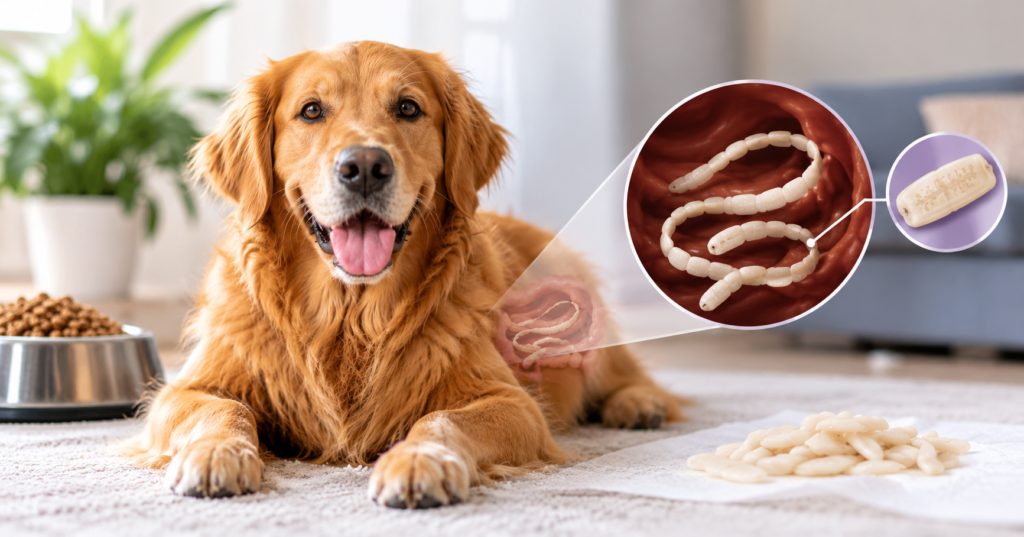
Tapeworm in Dogs: Signs, Treatment & Prevention
Medically Reviewed by Dr. Dinesh Moliya, B.V.SC & A.H, M.V.SC & A.H — 16 Years of Clinical Veterinary Experience | MomasPets
QUICK ANSWER Tapeworms in dogs often show up as small, rice-like segments near the tail or in stool, and are most commonly picked up by swallowing an infected flea. Treatment requires a dewormer that specifically targets tapeworms — general dewormers don’t always cover them — plus flea control to prevent reinfection. |
Tapeworms are one of the more visible parasites a dog can get, but they’re also one of the most misunderstood. Most cases trace back to fleas, not dirty water or bad food, which means treating the worm without addressing the flea problem almost guarantees it comes back.
How Dogs Actually Get Tapeworms
The most common route is swallowing an infected flea during grooming or scratching. Less commonly, dogs pick up tapeworms from eating raw meat or hunting small rodents that carry the parasite. This is why flea control is just as important as deworming when tapeworms are diagnosed.
Signs to Watch For
- Small, rice-grain-like segments near the tail, in bedding, or in stool
- Scooting or excessive licking around the tail area
- Mild weight loss despite normal appetite in some cases
- Occasionally, no visible symptoms at all — segments may be the only sign
Why General Dewormers Don’t Always Work
Not every dewormer covers tapeworms specifically — some are formulated for roundworms and hookworms only. A vet can confirm which parasite is present and recommend a product with the right active ingredient, usually praziquantel-based, to actually clear a tapeworm infection.
Preventing Reinfection
- Maintain consistent flea prevention year-round, not just in warmer months
- Avoid feeding raw meat without proper sourcing and handling
- Limit access to hunting small rodents where possible
- Follow up with your vet to confirm the infection has cleared
🛒 SHOP: Ecotas Bolus & Unizif Plus Bolus Deworming options used as part of a broader parasite control routine — ask your vet which product targets the parasite your dog actually has. |
🩺 NOT SURE WHAT’S GOING ON? Book a free online consult with Dr. Moliya before starting any treatment. Get a clear answer, not a guess. |
Frequently Asked Questions
How do dogs get tapeworms?
Most commonly by swallowing an infected flea while grooming. Less often, from eating raw meat or hunting small rodents carrying the parasite.
What do tapeworm segments look like in dog stool?
They look like small, rice-grain-sized segments, often visible near the tail, in bedding, or in fresh stool.
Can regular dewormers treat tapeworms?
Not always — some dewormers only target roundworms and hookworms. A vet can confirm the right product, usually praziquantel-based, for tapeworms specifically.
Will tapeworms come back after treatment?
They can, especially if flea control isn’t addressed at the same time, since fleas are the most common source of reinfection.
Are tapeworms dangerous to dogs?
Most cases cause mild irritation rather than serious illness, but ongoing infection can contribute to weight loss and discomfort if left untreated.
Can humans get tapeworms from dogs?
It’s uncommon but possible in certain circumstances. Practicing good hygiene and treating your dog promptly reduces this risk.
How do I know if my dog’s tapeworm treatment worked?
Follow up with your vet — they may recommend a stool check to confirm the infection has fully cleared.
Related Reading
- Best Dewormer for Dogs (Vet Guide)
- Ivermectin for Dogs: Uses, Dosage & Safety
- Horse Deworming Schedule: What Vets Recommend
Medical Disclaimer: This article is for general educational purposes and does not replace a hands-on veterinary examination. Dosage, diagnosis, and treatment must be confirmed by a licensed veterinarian based on your pet’s specific condition, weight, and health history. If your pet is showing severe or worsening symptoms, seek in-person veterinary care immediately.

About Us.
As pet parents ourselves, we’re devoted to the well-being of all pets in all situations. Our entire existence is dedicated to a “pet-first” mentality that seeks the most optimal outcomes in every situation.
Newsletter.


momaspet is proudly powered by WordPress